





Pearl River, NY – Rockland County lawmakers, state legislators, environmental advocates and residents gathered Thursday in Pearl River to urge Gov. Kathy Hochul to sign legislation that would temporarily restrict the development of large data centers while New York studies their effects on electricity, water resources and local communities.
The gathering was held at the Pearl River Little League fields and focused on the Responsible Data Center Development Act, which passed both houses of the New York State Legislature in June. The legislation remains awaiting action by the governor.
The legislation would impose a one-year moratorium on certain state permits and approvals for new large data centers. It also includes provisions addressing utility costs, environmental reviews, renewable energy use, public hearings and community benefits associated with future data center development.
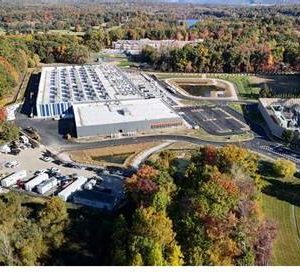
The issue has particular significance in Orangetown, where DataBank has proposed an expansion of its existing data center campus in Orangeburg. Opponents of the expansion have raised concerns about electricity consumption, water use, noise and other potential environmental effects.
Supporters of the state legislation say a temporary pause would allow officials to better understand those impacts before additional large projects move forward.
Rockland County Legislator Dana G. Stilley, who sponsored a county resolution supporting the state legislation, said officials should have a clearer understanding of how additional data centers could affect infrastructure and taxpayers before approving further large-scale development. The Rockland County Legislature recently adopted the resolution supporting the state bill.
County Legislators Beth Davidson and Jesse Malowitz also participated in Thursday’s event. Davidson argued that additional statewide review is necessary to examine the cumulative effects of data center development, while Malowitz said concerns about electrical infrastructure and costs extend beyond Orangetown to communities throughout New York.
Assemblymembers Patrick Carroll and Aron Wieder also expressed support for the legislation. Carroll, a co-sponsor of the bill, said the measure would establish additional requirements for studying data center development and addressing its impact on utility customers. Wieder said technological and economic development should proceed alongside consideration of its long-term effects on communities and infrastructure.
Hochul has already taken separate action on the issue. On July 14, she issued Executive Order 62, establishing a temporary moratorium affecting certain large-scale data center projects while the state develops additional standards. The order directs the Department of Public Service to examine impacts on the electric system and begin a formal environmental review addressing issues including energy demand, water use and quality, air quality and noise.
The executive order also cites the rapid increase in proposed data center electricity demand. According to the order, nearly 12 gigawatts of data center load requests were in the New York Independent System Operator interconnection queue as of May 2026, with more than eight gigawatts entering the queue during 2025 alone.
However, supporters of the legislation argue that the governor’s executive order does not cover every project that would be affected by the bill passed by lawmakers. The legislation generally establishes a lower threshold for its one-year permitting moratorium than the governor’s executive action.
Environmental organizations participating Thursday included the Sierra Club’s Lower Hudson Group and Food & Water Watch. Representatives raised concerns about electricity demand, water consumption, environmental effects and the possibility that infrastructure costs associated with large data centers could ultimately affect other utility customers.
The debate reflects a broader challenge facing New York as demand grows for computing infrastructure supporting artificial intelligence, cloud computing, streaming services and other digital operations. Data centers can provide investment and technological infrastructure, but large facilities can also require substantial amounts of electricity and water for computing and cooling systems. Hochul’s executive order acknowledges both the economic opportunities associated with data centers and concerns about their potential effects on energy supplies, water resources and host communities.
For now, the Responsible Data Center Development Act remains before the governor. Supporters in Rockland County are calling for Hochul to sign the measure, while the state continues developing its own regulatory framework for large-scale data center development.