



As calls grow for a debate between Bill Weber and challenger Joe Rand for NYS Senate District 38, we look at the political calculations that prompt campaign managers to decline invitations.
Rockland County, NY – When an elected official seeks another term in public office, voters may expect that candidate to participate in a public debate with a challenger. Such events provide an opportunity to compare experience, governing records, policy positions and plans for the future.
However, campaign managers view political debates differently.
For campaign managers, a debate is more than an opportunity to discuss public policy. It is also a strategic decision involving political risk, voter perceptions, media coverage – and the possibility that an unexpected exchange could influence an election.
This calculation scales for incumbent candidates, who already hold the office they seek to retain.
That dynamic has become part of the discussion surrounding New York’s 38th State Senate District, where Republican incumbent Bill Weber faces Democratic challenger and Nyack Mayor Joe Rand in the November 3 election. Both have attended several Meet the Candidates events, but with no direct debate.
In recent weeks, Rand has accepted every invitation to participate in debates, while Weber’s campaign has declined or not committed to several proposed events. Weber has also pointed to previous candidate forums and expressed an expectation of participating in an upcoming event at the New City Jewish Center.
The disagreement raises a broader question about modern political campaigns: Why might an incumbent’s campaign manager decide that avoiding a debate is the better electoral strategy?
1. The Incumbent’s Advantage: Protecting What Already Exists
One of the most important concepts in political campaign management is the advantage associated with holding public office.
Incumbents generally benefit from greater name recognition, an established record of public service, relationships with community organizations and opportunities to communicate with residents through their official responsibilities.
They may also have established fundraising networks, political endorsements and campaign organizations developed over previous elections.
A challenger, by comparison, often needs to introduce themselves to voters, build credibility and demonstrate why the current officeholder should be replaced.
A public debate can help accomplish those goals.
When two candidates stand on the same stage, they receive similar opportunities to address the audience. The challenger gains visibility alongside an elected official who may be better known to voters.
From a campaign manager’s perspective, this can create an imbalance in potential benefits.
An incumbent who is already well known might gain relatively little additional recognition from participating. The challenger, however, may gain exposure to voters who have never closely examined their qualifications or positions.
Political strategists sometimes describe this as an unequal risk-and-reward calculation.
The incumbent may enter a debate with an established reputation to protect, while the challenger enters with an opportunity to improve their standing.
Importantly, this calculation does not mean an incumbent necessarily fears an opponent or lacks the ability to defend a governing record. It means campaign managers may see little strategic benefit in providing an opponent with additional exposure.
The calculation also depends on the competitiveness of the race. A candidate facing a close contest may have a stronger incentive to debate than one whose campaign believes it already has substantial support.
There is no publicly established evidence that this calculation is the reason Weber’s campaign declined Rockland News’s invitation.
2. The Risk of an Unscripted Moment
Modern political campaigns operate in a media environment where individual statements can reach thousands of people within minutes.
A candidate might participate in a 90-minute debate, provide detailed answers on numerous policy issues and still find that one brief exchange dominates the following day’s news coverage.
An inaccurate statistic, poorly worded response, unexpected question or particularly effective challenge from an opponent can become a short video distributed across social media.
Campaign managers are aware that these moments can overshadow the remainder of a candidate’s performance.
The concern is not limited to whether a candidate understands the issues. Even experienced elected officials can stumble over a question, misunderstand what is being asked or make an offhand remark that becomes controversial.
A challenger may have more to gain from such an exchange because it creates an opportunity to question the incumbent’s judgment, preparation or record.
The incumbent may then spend valuable campaign time responding to criticism rather than discussing preferred topics.
In September 2026, ABC News examined the decline in political debates across the country. Craig Hennigan, a communications lecturer at the University of Nevada, Las Vegas, explained that the unpredictable nature of debates creates risks for candidates who have spent months developing a carefully controlled campaign message.
Campaign professionals therefore weigh not only the possibility of a strong performance but also the consequences of an unexpected mistake.
A debate can be successful for both candidates. But unlike an advertisement, prepared speech or written statement, the outcome cannot be fully controlled.
3. Campaign Managers Prefer to Control the Message
Campaign managers generally organize communications around a limited number of issues they believe will resonate with voters.
An incumbent may wish to emphasize legislative accomplishments, government funding, constituent services, public safety initiatives or other examples of work completed while holding office.
A challenger may prefer to discuss issues where the incumbent’s record is more vulnerable to criticism.
A debate creates an opportunity for those competing priorities to collide.
A moderator might introduce questions that neither campaign considers favorable. Candidates may be asked to explain earlier statements, defend controversial decisions or identify specific funding sources for their proposals.
The opposing candidate may then challenge the response.
This is substantially different from a campaign advertisement, social media video or prepared public appearance, where the candidate largely controls the message.
A campaign manager who believes the existing strategy is effective may prefer to continue communicating through those more predictable channels.
The development of digital campaigning has made this approach increasingly practical.
Campaigns can now communicate directly with targeted audiences through social media, email, online advertising and recorded interviews without participating in a traditional debate.
These alternatives do not necessarily provide voters with the same side-by-side comparison. Nevertheless, they give campaign organizations greater control over how and when their messages are delivered.
The Debate Dispute in Rockland County
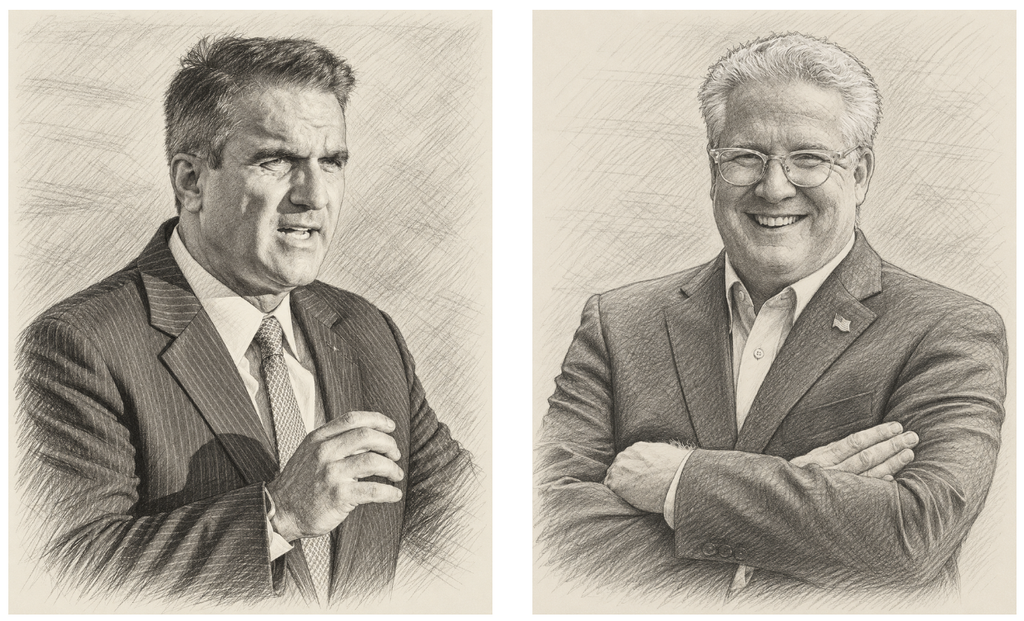
The current contest between Weber and Rand illustrates how these strategic considerations can become a public campaign issue.
Weber was first elected to the State Senate in 2022 and won reelection in 2024. Rand, who became mayor of Nyack in 2023, is seeking to represent the district in Albany.
On October 1, Rockland News reported that Rand’s campaign had accepted invitations from Rockland Community College, Rockland News and Rockland Daily to participate in debates or candidate forums.
At that time, Weber had not publicly accepted those invitations, according to the information available to Rockland News.
On October 7, Rockland News published an editorial calling for the candidates to participate in at least one formal, moderated debate before Election Day.
The publication emphasized that its position was not an endorsement of either candidate but a request that voters receive an opportunity to compare both candidates directly.
The debate issue continued through the following week.
On October 12, Rockland Daily reported that it had proposed an October 20 debate, secured a location and arranged for a moderator. According to its reporting, Weber’s campaign said the proposed date would not work. Rockland Daily subsequently offered an alternative date and was awaiting a response.
On October 17, Rockland News published an opinion column by Robert Jowaiszas titled “The Debate That Never Happened.” The column reported that Rand accepted a Rockland News debate invitation while Weber’s campaign manager declined.
Rockland News also announced that it had reserved the Fieldstone Middle School auditorium for a potential debate on Monday, October 26, at 7:30 p.m., offering the campaigns an opportunity to select their own moderator.
However, the question of Weber’s willingness to debate requires an important distinction.
In an October 11 report published by Monsey Scoop, Weber said that he and Rand had previously participated in candidate forums organized by the Nanuet Civic Association and the Nyack/Spring Valley NAACP at Rockland Community College.
Weber also said he looked forward to a debate at the New City Jewish Center, at 9 am on Sunday November 1st. However, in conversations with the organizers of the debate, they have stated that the event is not “officially” a debate, and the press is not allowed to livestream or video the event.
As of October 20, the publicly available information reviewed did not establish that the event would follow a traditional head-to-head debate format.
Therefore, it would be inaccurate to conclude that Weber has refused all opportunities to appear with Rand or answer questions. The documented dispute concerns particular debate invitations and whether voters will receive a formal, direct exchange between the candidates.
It also remains unclear whether Weber’s campaign declined the Rockland News invitation for strategic, scheduling, format-related or other reasons.
Without an explanation from the campaign addressing that particular decision, assigning a specific motive would be speculation.
Candidate Forums Are Not Always Debates
The distinction between a candidate forum and a political debate is important.
At a candidate forum, participants may answer prepared or audience-submitted questions. Depending on the rules, each candidate may speak separately, receive different questions or be prevented from directly challenging the other.
These events can provide valuable information about individual policy positions.
A formal debate generally includes a more structured comparison, with candidates responding to the same questions and receiving opportunities for rebuttal.
The ability to challenge another candidate’s answer is one of the defining differences.
For example, an incumbent might cite a particular amount of state education funding as evidence of effective representation.
In a formal debate, the challenger could question what portion of the funding resulted from the incumbent’s direct actions, what was already included in the state budget and whether the allocation represented an increase over previous years.
The incumbent would then have an opportunity to respond, provide documentation or challenge the opponent’s interpretation.
The same process could apply to the challenger’s claims.
Rand, for example, could be asked about decisions made during his tenure in Nyack, the financial implications of his proposals or how he would accomplish his legislative priorities in Albany.
A debate therefore creates opportunities for both candidates to be questioned under comparable circumstances.
A forum can accomplish some of these objectives, but its value depends on the format.
Neither type of event automatically guarantees an informative discussion. Moderator preparation, impartial rules, meaningful questions and adequate response times can significantly influence the quality of either format.
Debate Avoidance Has Become a National Trend
The Weber–Rand disagreement is not an isolated example of campaigns becoming increasingly selective about public debates.
An ABC News review published September 25 found that 21 of the 35 U.S. Senate races in 2026 had no debate scheduled between the major candidates at the time of its analysis.
The same review found that 21 of 36 gubernatorial contests had no major-party debate scheduled.
The reported numbers represented a substantial increase from earlier election cycles, although additional debates could still be arranged as Election Day approached.
The pattern is not exclusive to Republicans or Democrats.
In Arizona, Democratic Governor Katie Hobbs declined to debate her Republican challenger, arguing through her campaign that direct engagement with residents was more effective than participating in a debate focused on political soundbites.
In Nevada, Republican Governor Joe Lombardo had not publicly committed to proposed debates with Democratic challenger Aaron Ford as of late September.
Other candidates have cited concerns about misinformation, personal attacks, event formats and the usefulness of traditional debates.
These examples demonstrate that avoiding debates is not necessarily a reflection of a particular political philosophy. It can be a strategy employed by candidates from either party.
Incumbency is also not the only factor. Challengers and candidates without a clear advantage sometimes decline debates for their own strategic reasons.
What Research Says About the Value of Debates
Although campaigns sometimes conclude that debates are politically unnecessary, academic research indicates that they can provide meaningful information to voters.
A 1999 study by political scientist Thomas Holbrook, published in the journal Political Behavior, examined presidential debates between 1976 and 1996.
The research found that voters learned about candidates through debates, particularly when the candidates were relatively unfamiliar to the public.
It also found that earlier debates generally produced greater learning than subsequent debates.
A separate study published in the Journal of Political Economy in 2020 examined candidate debates in Sierra Leone.
Researchers Kelly Bidwell, Katherine Casey and Rachel Glennerster found that public debate screenings increased political knowledge and affected voting decisions in that setting.
The researchers also identified effects on campaign spending and political accountability.
The Sierra Leone findings cannot be assumed to apply directly to New York elections, but they provide evidence that candidate debates can influence political understanding and behavior under certain circumstances.
Research does not establish that every debate changes an election’s outcome. Many voters enter election season with firmly established political preferences, and some debates have limited measurable effects on support for candidates.
Nevertheless, debates can serve purposes beyond changing votes.
They provide opportunities to evaluate how candidates explain complex issues, respond to criticism, acknowledge mistakes and demonstrate their understanding of government.
For some voters, those qualities may be as important as individual policy positions.
Why the Timing Matters
Another significant issue in the Weber–Rand contest is the timing of any potential debate.
Rockland County’s early voting period begins October 24 and continues through November 1.
That means a debate held November 1 would take place on the final day of early voting, just two days before the general election.
By that point, some residents will already have cast their ballots.
A late debate can still serve voters who have not voted, and its recording may remain available afterward. However, it cannot influence decisions already finalized through early voting.
From the perspective of campaign strategy, a late debate also provides fewer days for an unexpected exchange to dominate the election’s final weeks.
That does not establish why any particular campaign might prefer a later date, but it illustrates another factor campaign managers can consider when negotiating debate schedules.
The distinction between scheduling convenience and deliberate political strategy can be difficult to establish without direct statements from the people making those decisions.
What Is Gained and Lost When a Debate Is Declined?
A campaign manager who recommends declining a debate may believe the decision protects the candidate from unnecessary risk.
The campaign can continue distributing prepared messages, attending selected events, meeting supporters and emphasizing issues considered most favorable to its election prospects.
Those activities are legitimate parts of the electoral process.
A debate, however, offers a different form of public examination.
It allows voters to observe two competing candidates addressing the same issues under similar conditions, with opportunities for their statements to be questioned.
An incumbent may benefit from such scrutiny by demonstrating familiarity with legislation, government operations and the challenges involved in public office.
A challenger may benefit by presenting new proposals, questioning the incumbent’s performance and establishing credibility.
Both candidates also face the possibility of providing weak or incomplete answers.
In the District 38 election, residents have substantial issues to consider, including property taxes, housing affordability, school funding, public safety, infrastructure and the cost of living.
Weber’s legislative record and Rand’s record as mayor provide different sets of experiences for voters to examine.
A direct debate would offer one method of comparing those records and the candidates’ plans for the next legislative term.
It would not replace examination of official records, legislative votes, government budgets or public statements.
Nor would participating in a debate, by itself, establish that one candidate is more qualified for office.
A Campaign Decision With Public Consequences
Ultimately, campaign managers are hired to help candidates win elections. Their responsibility is to evaluate opportunities according to their potential impact on the campaign.
A public debate can be valuable, but it is not always considered necessary to achieving that objective.
For an incumbent, declining an invitation may preserve an established advantage, limit unpredictable moments and prevent an opponent from obtaining additional exposure.
For a challenger, an invitation to debate can create an opportunity to become better known and distinguish proposed changes from an incumbent’s governing record.
These are general principles of campaign management, not established explanations for the Weber campaign’s decisions.
The available record shows that Rand has accepted multiple proposed debates, Weber’s campaign has declined or not committed to certain invitations, and Weber has expressed willingness to participate in other public forums and an upcoming event.
Whether the candidates ultimately participate in a traditional, moderated debate before November 3 remains an open question.
The broader distinction is between what may be strategically beneficial for an individual campaign and what opportunities are available to voters seeking information.
Those interests can overlap, but they are not always identical.
In the end, the decision to accept or decline a debate belongs to the candidates and their campaigns.
The decision about which candidate should represent State Senate District 38 belongs to the voters.
Sources and related reporting
- Rockland News — State Senator Race Heats Up: Joe Rand vs. Bill Weber, October 1, 2026
- Rockland News — Editorial Calling for Public Debates, October 7, 2026
- Rockland News — The Debate That Never Happened, October 17, 2026
- Rockland Daily — Weber–Rand Debate Proposal, October 12, 2026
- Monsey Scoop — Both Candidates Respond to Debate Calls, October 11, 2026
- New City Jewish Center — November 1 Political Breakfast
- ABC News — Midterm Candidates Declining Debates, September 25, 2026
- Political Behavior — Political Learning from Presidential Debates (1999)
- Journal of Political Economy — Debates: Voting and Expenditure Responses to Political Communication (2020)
- Rockland County Board of Elections — 2026 Early Voting Schedule
Advertisements