(ROCKLAND, New York) June 4, 2021 – For the past 30 years, Down to Earth Living in Pomona, New York has been providing scholarships to North Rockland High School graduates. This year’s recipients of the $500 awards are Alessandro Troncoso who will attend Princeton University, Christian Molina who will attend Manhattan College, and Jamie Kapusinsky who will attend the University of Connecticut.
“Down to Earth is delighted to provide three deserving students with an award that will help them continue on their path toward their futures. Helping young people in our community realize their dreams is an important part of our company’s mission,” stated Risa Hoag, spokesperson for the company.
Down to Earth Living staff use five criteria to determine the winners each year. First and foremost is academic performance which is based upon GPA and other available test scores, followed by participation in extracurricular activities, applications and club memberships, and community service. A topical essay is also required to demonstrate the student’s ability to communicate, and the student must also show the specific goal-directed activities taken toward achieving his or her future career. Financial need is also taken into consideration.
Down to Earth Living is located at 1040 Route 45, Down to Earth Living is open 9 am – 5 pm daily and can be reached at 845-354-8500 or via their website at www.dteliving.com.
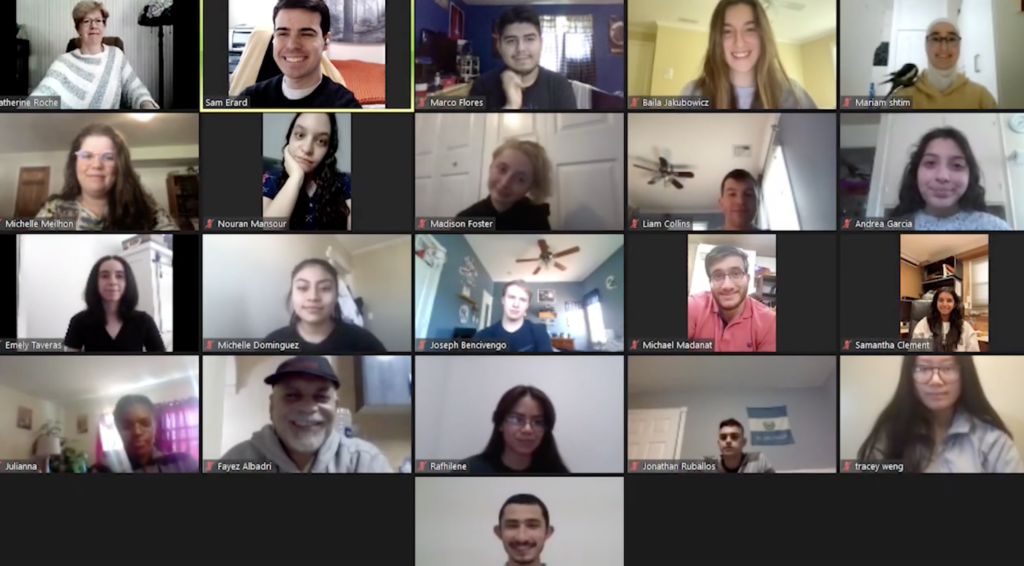
ROCKLAND COUNTY, N.Y. (June 3, 2021) – Rockland Community College honors class won second place in the Global Solutions Sustainability Challenge where twenty-seven international teams from institutions in the U.S., Iraq and Jordan competed in a competition focused on technology and sustainability.
The Global Solutions Sustainability Challenge is funded by the Stevens Initiative, which is sponsored by the U.S. Department of State with funding provided by the U.S. Government and is administered by the Aspen Institute. It is also supported by the Bezos Family Foundation and the governments of Morocco and the United Arab Emirates. The program is implemented by IREX, a global development and education nonprofit organization dedicated to building a more just, prosperous, and inclusive world.
The RCC team was awarded second place in the competition, along with an award of $1,500 to be used to further develop their project on creating a smart technology-based agricultural solution to help farmers around the globe optimize their utilization of water for irrigation.
“Jordan relies on one primary water source for all of their needs, and proper water management is essential for their future. Through our prototype, named MIST, we saw a reduction in water use by 50%. An advancement in this system could potentially save a standard commercial farm over a million dollars a year on their water cost,” says Samuel Erard, A.S. Business Administration Honors Track.
The RCC team was selected as one of six finalists to progress to the Virtual Business Expo. At this event, a student representative from Rockland Community College and from Middle East University presented a 3-minute Shark Tank style pitch to an audience of over 100 people and panel of 6 judges.
“Today’s students are global citizens and will have to work together to devise solutions to shared global issues,” says Catherine Roche, RCC Professor of Business and RCC’s team facilitator. “This project-based experiential learning experience enabled students to develop cross-cultural awareness as well as workplace skills such as teamwork, problem solving, critical thinking, decision making, and empathy. I was impressed with students’ commitment to the project and am very proud of the professional work they collectively produced.”
The prize money will go towards launching the technology that was pitched during the competition to help farmers – not only in Jordan but throughout the world – to save water and improve harvests.
“Working with an entirely different culture was a great learning experience,” says Michelle Meilhon, A.S. Business Administration Honors Track. “I was proud to be part of the team – we worked really hard and it truly paid off.”
For more information on this project, visit the website and the video they produced. https://www.h20united.com
About Rockland Community College, State University of New York
Rockland Community College, State University of New York, offers a safe, supportive learning environment for thousands of students from diverse backgrounds who appreciate small class sizes and personal attention from a distinguished, award-winning faculty that includes Fulbright scholars and SUNY Distinguished Professors. Thanks to the school’s affordable tuition, students who begin their career journey at RCC and then transfer to a four-year college can save up to $100,000 on their education. RCC is also proud to provide career training and professional development to adult learners looking to change careers or upgrade their skills through its new Career Skills Academy. More information can be found at sunyrockland.edu.
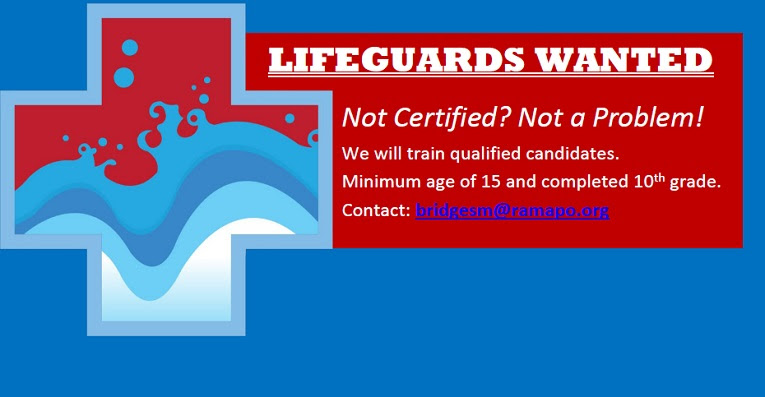
The Town of Ramapo is in search of lifeguards. Must be at least 15 years old and have completed 10th grade. Willing to train qualified candiates. Contact bridgesm@ramapo.org for more information.
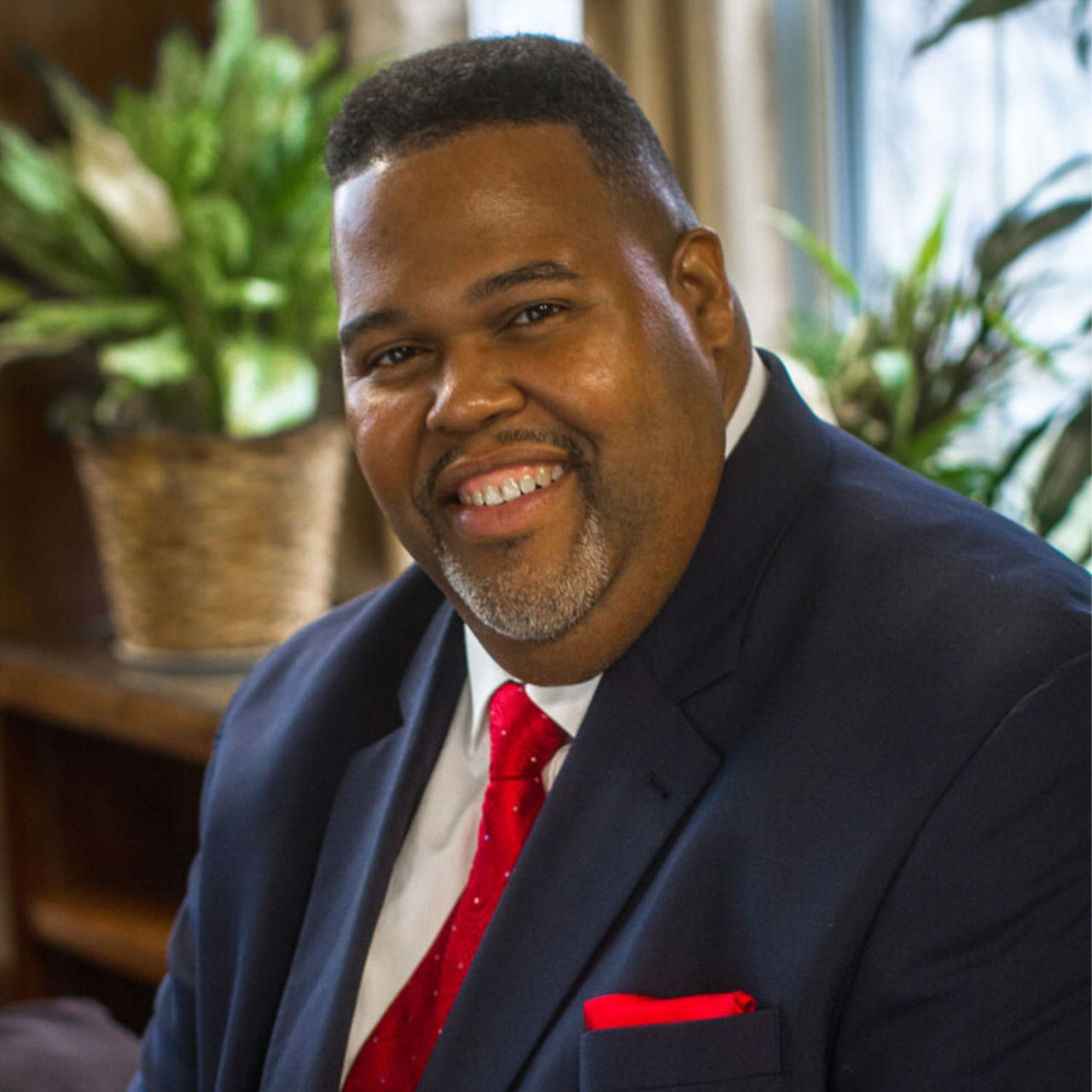
ROCKLAND COUNTY, N.Y. (May 26, 2021) – Rockland Community College announced today that Dr. Michael Baston, President, has been selected to join the Education Design Lab’s Designers in Residence program. As a part of the program, Dr. Baston will be building on identifying the jobs of the future and developing curriculums and career skill pathways that meet the needs of community and commerce partners, and continuing to develop the RCC initiative of Steps Beyond Statements to close equity gaps.
Spanning a diverse cross-section of communities, institutional positionality, and lived experience and expertise, the Designers in Residence will work together as a design team to co-create a model for colleges to be regional change agents to close economic and racial opportunity gaps as we move into a post-COVID economy.
“I am honored to be selected to be a Designer in Residence. This presents a unique opportunity to learn from innovators across the country and contribute the insight we have amassed at RCC to help others develop the institutions that they want to see serving their communities. RCC has a long-standing commitment to be a catalyst for economic growth in our region, offering thoughtfully designed programs and partnerships that are responsive to both student and workforce needs. But we can always do more to support students, which includes learning from other innovators across the country,” said Dr. Baston. “Within the cohort, we will be able to leverage our collective expertise to develop new insights regarding how higher education can best serve students today and in the future. I look forward to those insights impacting not only our own students, but students across the country.”
Dr. Baston intends to share RCC’s Steps Beyond Statements program which dictates that community colleges must first offer a safe and welcoming environment, create strategic partnerships between the college and the community, and take advantage of organizational resources and collaborative leadership to ensure equitable opportunities and outcomes for all students.
In 2021, 22% fewer students enrolled in higher education than prior to the COVID-19 pandemic, a number that increases to 30% for students from low-income high schools. Simultaneously, 42% of jobs lost during the pandemic may disappear forever, requiring postsecondary education to reimagine how learners are prepared to enter the workforce. Across New York the number of students applying to attend one of the State University of New York’s 64 campuses fell by 20 percent this year amid the coronavirus pandemic. One of the major objectives of the Workforce Development Board of Rockland County is to strategically direct training resources to in-demand industries that are driving economic development in the County. The four key industries of focus are Advanced Manufacturing, Data Technology, Biomedical, and Hospitality and Tourism.
To help address these disparities, Designers in Residence will leverage their collective expertise to co-create a framework that centers on the needs of their learners within a rapidly evolving economy and provide the start of a roadmap for other institutions and innovators seeking to build and scale this system.
“We hope to emerge from this year with design tools that will position the scores of learner success partnerships around the country to seize what we all believe is an innovation moment, coming out of the pandemic,” said Kathleen deLaski, CEO of the Education Design Lab. “Colleges recognize that their roles are evolving along with learner views about degrees and employer’s needs, and with a heightened urgency around what it will take to break down racial and economic barriers to open up livable wage futures for all.”
Other members of the Designers in Residence cohort include:
Bonita Brown, Vice President and Chief Strategy Officer, Northern Kentucky University
Ahmad Ezzeddine, Associate Vice President of Educational Outreach and International Programs, Wayne State University
Chanel L. Fort, Director of Academic Innovation and Learning Strategist, Fortified Learning Solutions, Stillman College
Rose Rojas, Interim Director of Workforce Strategy, Maricopa Community College
Adrian Haugabrook, Executive Vice President and Managing Director, Social Impact Collective, Southern New Hampshire University
Lisa Larson, President, Eastern Maine Community College
Cameron McCoy, Incoming Provost, Shenandoah University
Nicole McDonald, Assistant Vice President, University of Houston
Jairo McMican, Dean of Student Learning/Director of Equity and Pathways, Central Carolina Community College
Ian Roark, Vice President of Workforce Development and Strategic Partnerships, Pima Community College
Stacy Townsley, Vice President of Adult Strategy and Statewide Partnerships, Ivy Tech Community College
This program is funded by the Bill & Melinda Gates Foundation and views expressed by the program do not necessarily reflect positions or policies of the foundation. Learn more about the program here.
About Rockland Community College, State University of New York
Rockland Community College, State University of New York, offers a safe, supportive learning environment for thousands of students from diverse backgrounds who appreciate small class sizes and personal attention from a distinguished, award-winning faculty that includes Fulbright scholars and SUNY Distinguished Professors. Thanks to the school’s affordable tuition, students who begin their career journey at RCC and then transfer to a four-year college can save up to $100,000 on their education. RCC is also proud to provide career training and professional development to adult learners looking to change careers or upgrade their skills through its new Career Skills Academy. More information can be found at www.sunyrockland.edu.
About Education Design Lab: Education Design Lab is a national nonprofit that designs, tests, and implements unique higher education models and credentials that address the rapidly changing economy and emerging technology opportunities. The Lab demonstrates where technology, rigor and design can improve opportunity for historically underserved learners to maximize their potential in the higher education system.
Education Design Lab works across disciplines and alongside schools, employers, entrepreneurs, government, foundations, nonprofits and innovators. The organization has significant experience managing national and local learning cohorts, working with organizations such as The Michael and Susan Dell Foundation, the United Negro College Fund, Walmart, American Council on Education and the ECMC Foundation. Learn more: www.eddesignlab.org.
Qualifying eating establishments should submit applications by theMay 24th deadline
WASHINGTON – Administrator Isabella Casillas Guzman announced that eligible eating establishments have until Monday, May 24, 8 p.m. ET, to submit applications to the Restaurant Revitalization Fund.“If our nation’s food and beverage industry is going to fully recover, we must ensure as many of the hardest-hit businesses get the economic aid they need,” said Administrator Guzman. “We are committed to creating easy to navigate programs and removing barriers that have kept many of our nation’s smallest businesses from accessing these crucial economic lifelines. The SBA will continue to be as entrepreneurial as the small businesses we serve, and we will continue to work as fast as possible to deliver the relief our businesses need so urgently.” “The numbers speak to the commitment SBA made to educating owners and operators through their work with the Association, our state partners, and other industry support organizations,” said Tom Bené, President & CEO of the National Restaurant Association. “The funds that have already been distributed will help accelerate the recovery of thousands of restaurants and bring much-needed capital to communities across the country.” The $28.6 billion Restaurant Revitalization Fund signed into law by President Joe Biden established an initial $5 billion set-aside established by Congress for applicants with gross receipts not more than $500,000. To further ensure an equitable distribution of funds, Administrator Guzman created two additional funding allocations to ensure the smallest of the small restaurants and other eating establishments have equitable access: 1) $500 million for applicants with 2019 gross receipts not more than $50,000, and 2) $4 billion for applicants with 2019 gross receipts between $500,000 and $1,500,000. In the first two weeks of the RRF program, and after 600 targeted community outreach events in multiple languages, SBA has received from priority groups:
12,898 applications from businesses with not more than $50,000 in pre-pandemic revenue requesting $290 million in funds
73,671 applications from businesses with not more than $500,000 in annual pre-pandemic revenue requesting $6.1 billion in funds
34,010 applications from businesses with $500,000 – $1,500,000 in annual pre-pandemic revenue requesting $8.4 billion in funds
Designed to ensure the smallest of small eating establishments get the relief needed, set-asides continue a commitment to an equitable distribution of funds to hard-hit communities. Because SBA still has potential set-aside funding available for eligible establishments with 2019 annual revenue of not more than $50,000, it will keep the application portal open until Monday, May 24, 8 p.m. ET. While all qualified restaurants may submit applications, more than $220 million of a $500 million set-aside remains in the Restaurant Revitalization Fund (RRF). Eligible establishments that meet this revenue standard are encouraged to apply through SBA-recognized point-of-sale vendors or directly via the SBA online application portal. To date, the RRF program has received more than 303,000 applications representing over $69 billion in requested funds, and nearly 38,000 applicants have been approved for more than $6 billion. Of the overall submitted applications, 57 percent came from women, veterans, and socially and economically disadvantaged business owners. During the first two weeks of the program, SBA has received applications from:
More than 122,000 women business owners
More than 14,000 veteran business owners
More than 71,000 economically and socially disadvantaged individuals
For those interested in applying to the Restaurant Revitalization Fund, visit sba.gov/restaurants.