







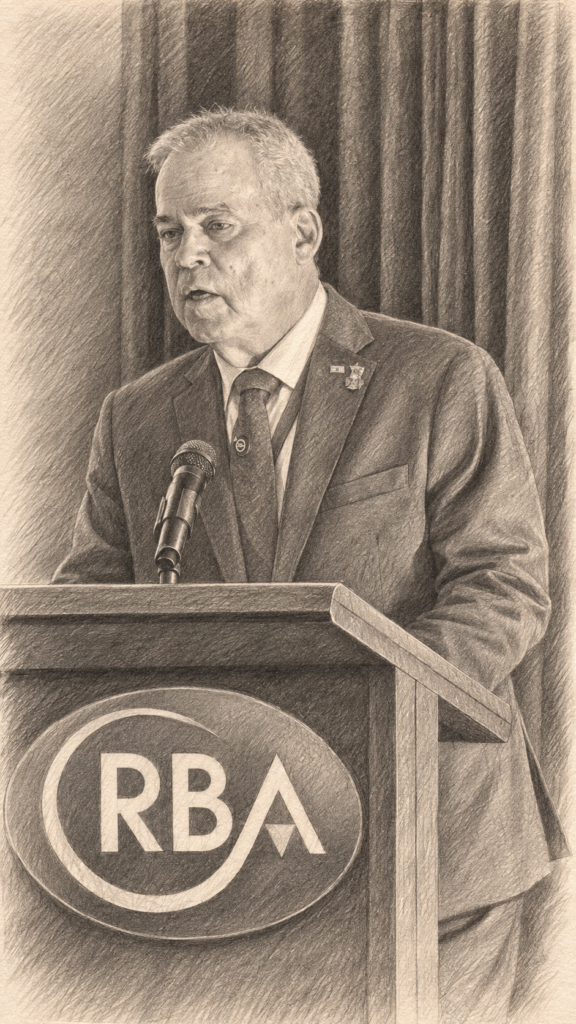
Nyack, NY – Rockland County Executive Ed Day delivered a cautiously optimistic assessment of the county’s economic and financial condition Thursday, November 19, during the Rockland Business Association’s (RBA) monthly luncheon at the Hotel Nyack.
While highlighting major improvements in the county’s finances, Day warned that rising operating expenses – and new state and federal funding requirements could create substantial financial challenges in the coming years.
The luncheon, sponsored by West Group Law PLLC, brought together business leaders, elected officials and community representatives to discuss Rockland County’s economic outlook and priorities for 2027.
The Good News: Strong Finances, Lower Taxes and Economic Growth
Day began by highlighting Rockland County’s financial recovery since he took office in 2014, when the county faced a $138 million deficit and significant fiscal uncertainty.
According to Day, years of budget management, spending controls and long-term financial planning have transformed Rockland into one of New York State’s strongest counties financially.
Among the administration’s most significant accomplishments are top-tier bond ratings from Moody’s and Fitch Ratings. Both agencies have awarded Rockland their highest available ratings, reflecting the county’s improved financial reserves and ability to meet its financial obligations.
These ratings can also help the county obtain more favorable borrowing rates, reducing the long-term cost of financing public projects.
Day also emphasized the county’s record on property taxes. His proposed $964.8 million budget for 2027 includes no increase in county property taxes, continuing a multiyear period of tax stability. The administration has also reduced county property taxes by approximately 4% in recent years.
He described these financial policies as important signals to businesses and potential investors that Rockland is committed to maintaining a stable and predictable economic environment.
Tourism was another positive indicator. Day reported that visitor spending increased approximately 8% during the summer of 2026, generating additional economic activity for local businesses. Events that fueled this included the recent in-County events (named “Global Rhythms Festival“) the World Cup, as well as musical events such as Rockland Music Fest XII.
Day explained that increased visitor spending contributes to sales tax revenue, helping offset the costs of county services and reducing pressure on property taxpayers.
The county is also pursuing additional tourism opportunities, including a planned multiday Sons of Italy event intended to attract visitors and support local businesses.
Beyond fiscal management, Day highlighted the county’s commitment to open-space preservation. Approximately one-third of Rockland County, representing more than 42,000 acres, is protected open space.
That includes the recent acquisition of 236 acres in the Eagle Valley Assemblage in Sloatsburg, the largest purchase under the county’s Open Space Acquisition Program.
Additional investments in trails, parks and recreational opportunities are planned for 2027, with the county seeking grant funding where possible.
The Bad News: Rising Costs and Federal Funding Changes
Despite these accomplishments, Day cautioned that Rockland’s favorable financial position could face serious challenges beginning in 2027.
Among his concerns are rising healthcare and pension expenses, along with additional financial responsibilities being transferred to county governments by the state and federal governments.
The most significant concern involves changes to the Supplemental Nutrition Assistance Program, commonly known as SNAP.
Beginning October 1, 2026, the federal government reduced its contribution toward SNAP administrative expenses from 50% to 25%.
Under New York State’s existing funding structure, county governments are responsible for the non-federal share of those administrative costs. As a result, Rockland’s responsibility has increased from 50% to 75%. Day described the arrangement as unsustainable over the long term.
An additional concern involves new SNAP benefit cost-sharing requirements tied to payment error rates.
Day reported that Rockland County’s error rate is approximately 5.6%, below the 6% threshold that can trigger additional costs. However, because the federal funding formula evaluates statewide error rates rather than individual county performance, Rockland could still face financial consequences associated with New York State’s overall results.
Day questioned the fairness of requiring counties with lower error rates to absorb costs associated with statewide performance.
According to projections he presented, the combined financial impact of these changes could reach approximately $6.8 million in 2027 and nearly $20.6 million in 2028, depending on how the state handles the additional obligations.
Although the county has accounted for anticipated 2027 expenses within its proposed budget, Day warned that repeatedly relying on accumulated financial reserves would not be sustainable.
“We can’t keep going to the well,” Day told attendees, emphasizing the importance of maintaining healthy reserves for unexpected expenses and future financial needs.
Without additional assistance from Albany, he said, these obligations could restrict the county’s ability to continue reducing taxes or expanding services.
The warning also comes as governments throughout New York face similar pressures from increasing personnel costs, healthcare expenses and changes in federal assistance programs.
Preparing for the Years Ahead
To address these challenges, Day said his administration is continuing efforts to improve government efficiency and control expenses.
Among the initiatives underway are automated workflows within the county’s Law Department, modernization of purchasing and procurement procedures, improvements to information technology, and additional investments in cybersecurity.
Day said these operational improvements may receive less public attention than major capital projects but remain essential to maintaining fiscal stability.
He also emphasized the importance of cooperation between local government and the business community, describing economic growth and responsible public administration as closely connected.
Day concluded by reaffirming his administration’s commitment to protecting taxpayer dollars, maintaining Rockland’s financial stability and creating an environment where businesses can continue to grow.
His overall message was that Rockland County enters 2027 from a position of considerable financial strength, but maintaining that position will require continued financial discipline and careful management of expenses beyond the county’s direct control.
RBA Approves New Bylaws and Outlines Executive Board Changes
In addition to Day’s keynote address, the Rockland Business Association conducted its annual membership meeting, approving revised organizational bylaws and a slate of board directors.
RBA Board Chairman Michael Beckerle of Beckerle Lumber & Supply led the proceedings. The updated bylaws, dated October 28, 2026, represent the association’s first major governance revision in approximately 18 years.
The changes are intended to modernize the association’s operations, clarify leadership responsibilities and strengthen accountability.
The association also introduced its proposed executive leadership for 2027:
- Chairman: Michael Beckerle, Beckerle Lumber & Supply
- First Vice Chair: Joseph R. Lagana, U.S. Information Systems
- Second Vice Chair: Cara Pace, United Hospice
- Treasurer: Lena Bodin, People Resource Strategies
- Secretary: Dan Ortega, Elec 825
The executive leadership slate is expected to receive formal confirmation at a subsequent board meeting, in accordance with the revised bylaws.
Beckerle also recognized outgoing executive leadership members Brian Campbell, Judith Bachman and Michael Shilale for their contributions to the association.
RBA President Jeffrey Greenberg discussed additional organizational initiatives for 2027, including a redesigned membership website scheduled for January 1 and the return of the Rising Stars recognition program, intended to honor individuals making meaningful contributions to Rockland businesses and organizations.
Advertisements