
Nyack, NY – Downtown Nyack has long been one of Rockland County’s best-known destinations for restaurants, bars, live music and nightlife, but residents and local officials say the village’s late-night scene has changed significantly from its peak decades ago.
A News 12 report published Thursday examined the changing character of downtown Nyack through the perspective of longtime residents, business owners and village officials. While some see quieter streets and vacant storefronts as evidence that the village has lost part of its former energy, others say Nyack is not disappearing but evolving as entertainment habits and economic conditions change.
Photographer and artist Josh Alvarez has documented downtown Nyack for years and remembers a much different atmosphere during the late 1990s and early 2000s. At the time, Main Street and Broadway routinely attracted large nighttime crowds, with bars, restaurants and music venues remaining busy into the early morning hours.
Today, Alvarez sees a noticeably quieter downtown. His photographs have captured vacant storefronts and streets that are less crowded than they were during Nyack’s earlier nightlife era.
However, Nyack Mayor Joe Rand offered a different perspective. While acknowledging that the village’s nightlife has changed, Rand said the shift should not necessarily be interpreted as evidence that downtown Nyack is failing.
Instead, Rand pointed to broader changes in the way people socialize and spend their leisure time. Younger generations may be less likely to spend an entire evening moving between traditional bars and clubs, while restaurants, live entertainment, community events and other activities have become a larger part of the village’s identity.
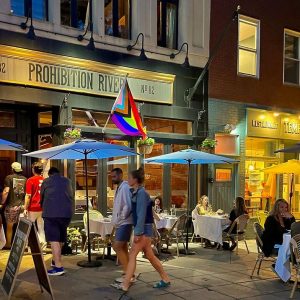
Nyack continues to promote a variety of nighttime entertainment options. The village currently has restaurants, pubs, live music venues and other establishments operating downtown. Visit Nyack lists businesses including Maureen’s Jazz Cellar, Olive’s, Olde Village Inne, Prohibition River and several other establishments as nightlife destinations.
The changing nightlife comes as downtown businesses face broader economic challenges.
A 2026 strategic investment plan prepared as part of New York State’s NY Forward program surveyed approximately 35 downtown Nyack business owners. Respondents cited the village’s walkability, concentration of businesses, creative environment and sense of community as reasons for operating downtown. Street festivals were also widely viewed as a way to attract visitors.
At the same time, businesses identified several difficulties. Some reported inconsistent local patronage, particularly during weekdays and winter months. Rising inventory costs and high rents were also cited as obstacles. Vacant commercial properties and parking concerns were among the most frequently identified challenges.
Those concerns have become part of a larger effort to reshape downtown Nyack.
In May, Gov. Kathy Hochul announced nine projects that will share approximately $4.5 million in state funding through the NY Forward program. The projects were selected following a community planning process in which nearly 30 proposals were considered. Village officials ultimately recommended 14 projects totaling approximately $6.5 million before the state selected nine for funding.
The investment is intended to improve the downtown area while supporting economic activity and maintaining Nyack’s identity as a walkable Hudson River community.
Nyack also continues to draw large crowds for special events. Its seasonal street fairs bring vendors, food and live entertainment to Main Street and Broadway. The April 2026 SpringFest, for example, featured approximately 200 vendors along with live music, food and outdoor dining.
The result is a downtown that may look different depending on when it is visited. Large community events can still fill the streets with thousands of visitors, while an ordinary late evening may be considerably quieter than residents remember from previous decades.
The disagreement, therefore, may be less about whether Nyack has changed and more about what that change represents. For residents nostalgic for a period when downtown bars and clubs regularly remained crowded late into the night, the difference can be striking. Village officials, meanwhile, view the transition as part of a broader change in how people dine, socialize and seek entertainment.
Whether Nyack can combine its traditional nightlife with restaurants, arts, live music, community events and new development will likely help determine the next chapter for one of Rockland County’s most recognizable downtown districts.