


Executive order targets facilities using at least 50 megawatts of power.
Orangeburg projects face separate questions over energy use, environmental impacts and tax incentives
ROCKLAND COUNTY, N.Y. — Gov. Kathy Hochul on Tuesday imposed the nation’s first statewide moratorium on certain permits for new hyperscale data centers, bringing New York into a growing national debate over the enormous amounts of electricity, water and public infrastructure required to support artificial intelligence and cloud computing.
The July 14 executive order is not a blanket prohibition on data-center construction.
Instead, it directs the state Department of Environmental Conservation to pause discretionary permit applications for data centers capable of consuming at least 50 megawatts of electricity when those applications had not been declared complete before the order was issued. Local zoning, planning and building approvals are not suspended.
The pause will remain in effect while the state prepares a broad environmental review examining data centers’ effects on electricity demand, water resources, air quality, noise and disadvantaged communities. The Hochul administration expects the process to take up to one year.
State officials say nearly 12,000 megawatts of proposed data-center demand had entered New York’s electric-grid interconnection queue as of May, including more than 8,000 megawatts added during 2025 alone. Hochul said the rapid increase raises the risk that residential and business customers could be forced to help pay for transmission lines and other grid improvements needed by large technology companies.
The order also directs state agencies to develop a community-investment framework that local governments could use when negotiating with data-center developers. Possible benefits include payments for public infrastructure, child care, workforce training and local energy improvements. Regulators will also consider requiring developers to contribute to a grid-acceleration fund or finance new power generation and battery storage for their operations.
Hochul additionally said she will seek legislation eliminating statewide sales-tax exemptions for the largest data centers.
What the order could mean for Rockland
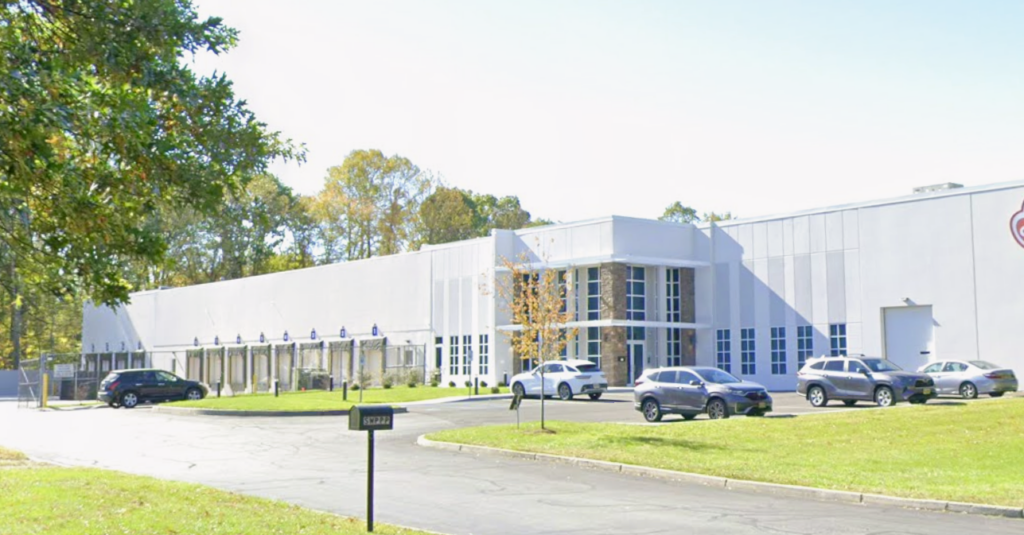
The immediate effect on Rockland County’s known data-center projects may be limited because several existing facilities are already operating, while at least one prominent expansion appears to fall below the order’s 50-megawatt threshold.
Orangeburg has developed into a regional data-center hub, with facilities operated for or associated with companies including Bloomberg, JPMorganChase, DataBank and 1547 Critical Systems Realty. The concentration has generated construction investment and tax revenue, but it has also prompted concerns about electric demand, noise, diesel generators, wetlands and the relatively small number of permanent jobs created by the facilities.
DataBank currently operates a 20-megawatt facility at 2000 Corporate Drive, near Lake Tappan and the New Jersey border. Earlier versions of its proposed second phase would have added approximately 20 megawatts, bringing the campus to a publicly reported total of roughly 40 to 45 megawatts. Based on those figures, the project appears to remain below the threshold established in Hochul’s executive order.
The company has since reduced the proposed building to approximately 77,862 square feet and eliminated a proposed electrical substation. On July 8, the Orangetown Planning Board unanimously determined that the expansion could have significant environmental effects and ordered a more extensive environmental-impact statement. Board consultants and residents cited electricity use, air quality, noise, diesel exhaust and the project’s proximity to the Lake Tappan reservoir.
Whether any individual Rockland project is covered by the state moratorium will ultimately depend on its maximum power demand and the status of any required DEC permits as of July 14.
Orangetown is also considering its own data-center moratorium. The Town Board recently hired a planning consultant to study possible zoning changes and a temporary pause, although Supervisor Teresa Kenny has said a future local moratorium would not apply retroactively to DataBank’s pending application.
Other expansion plans could receive closer attention under the state’s new framework. The 1547 Critical Systems facility at 1 Ramland Road currently has 24 megawatts of critical-power capacity. Its operator has reported that an additional 12-megawatt utility feed is under development and that longer-range plans include another 230,000-square-foot building supported by a proposed 60-megawatt substation. The eventual energy demand and permitting status of that expansion have not been publicly established.
Tax breaks likely to face greater scrutiny
Hochul’s proposal to repeal sales-tax exemptions could have significant implications in Rockland, where the county Industrial Development Agency has used such incentives to support data-center projects.
The IDA approved nearly $77 million in sales-tax exemptions for a roughly $1 billion JPMorganChase expansion in Orangeburg. The project pledged to create one additional permanent job, according to documents reviewed by New York Focus. IDA officials have defended the agreement, saying the construction could generate more than 1,400 temporary jobs and produce more than $100 million in local economic benefits.
The debate reflects a broader question facing communities that host data centers: whether large capital investments and additions to the property-tax base compensate for heavy energy use, infrastructure demands, environmental risks and limited permanent employment.
The New York Legislature has passed a broader measure, the Responsible Data Center Development Act, which would apply its permitting moratorium to facilities with peak demand of 20 megawatts or more. That bill, S.10642/A.11560, would also establish separate utility-rate classifications, public-hearing requirements, labor standards and host-community benefits. It remains before the governor.
Hochul’s executive order sets a higher 50-megawatt threshold and exempts facilities primarily used for manufacturing, academic research, education and medical care.
Opposition grows nationally
Public resistance to new data centers is increasing well beyond New York.
A June Reuters/Ipsos survey found that 57 percent of Americans would oppose a data center in their community, while 14 percent said they would accept one nearby. Seventy-seven percent expressed concern that AI-related data centers could increase electricity prices.
Texas Gov. Greg Abbott, whose state has traditionally welcomed data-center investment, recently called for prohibiting new AI data centers in rural residential communities. He has also proposed requiring developers to finance their own power infrastructure and reuse water consumed by their facilities.
For Rockland County, the most immediate consequence of Hochul’s action may not be the cancellation of a particular development. Several local facilities are operating, under construction or reportedly below the executive order’s threshold.
The longer-term consequences could be more substantial. Statewide standards governing grid costs, water consumption, environmental reviews, community payments and tax incentives could reshape how future expansions are evaluated—and what companies must provide in return for locating their energy-intensive operations in Rockland.