
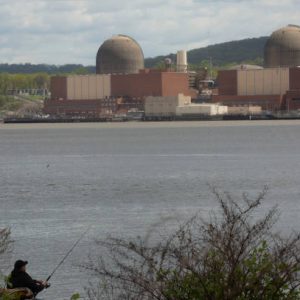
New City, NY – Rockland County legislators are pushing back against renewed calls to reopen the former Indian Point nuclear power plant, arguing that the facility’s past safety concerns remain unresolved and that policymakers should focus instead on other energy options.
In a press release issued Tuesday, March 11, Rockland County Legislators Alden H. Wolfe and Beth Davidson said they oppose efforts by U.S. Rep. Mike Lawler and others to restart the plant, which is located in Buchanan in neighboring Westchester County along the Hudson River.
The legislators said their position is rooted in concerns that long surrounded Indian Point before its final operating reactor shut down in 2021. Those concerns, they said, include the plant’s aging infrastructure, the challenge of emergency evacuation in a densely populated region, past leaks of radioactive water, the continued storage of spent nuclear fuel on-site, and the plant’s location near seismic fault lines.
Their statement came one day after a 2.3-magnitude earthquake centered in Sleepy Hollow was recorded nearby. Wolfe and Davidson cited that event as a reminder of the region’s seismic activity and as another reason to exercise caution when discussing any return to operations at Indian Point.
“For decades, Rockland County has raised serious concerns about the safety of Indian Point and the risks it posed to the millions of people living in the Hudson Valley and the greater New York metropolitan area,” Wolfe said in the release. “Those concerns have not disappeared simply because the plant has closed.”
Indian Point had been the subject of years of political, regulatory and public debate before it was decommissioned. Supporters of closure pointed to safety and environmental risks, while supporters of the plant often argued that it provided a major source of reliable electricity with low greenhouse gas emissions. The latest statement from Rockland legislators adds to that long-running regional debate, which has taken on new urgency as New York and the surrounding region continue to face pressure over grid reliability, energy supply and electricity costs.
Davidson said Rockland officials had spent years raising alarms about the plant and that reopening it would revive issues that local governments and residents had never considered fully resolved.
“Rockland County leaders spent years advocating for the closure of Indian Point because the potential risks to public safety, public health, and our environment were simply too great,” Davidson said. “Reopening the plant would mean revisiting the very same unresolved issues that concerned residents and local governments for decades.”
Wolfe also disputed the idea that returning Indian Point to service would offer a quick fix for rising electric bills.
“Restarting a decommissioned nuclear facility is not a simple or quick solution, and it would not meaningfully lower electricity bills for families and businesses,” Wolfe said. “Energy affordability is an important issue, but bringing back Indian Point is not the answer.”
The legislators also tied their opposition to broader concerns about federal oversight of nuclear plants. In the release, Davidson pointed to a report by NPR that she said described major changes in federal nuclear rules. According to the statement, those changes include reductions in security requirements, environmental protections, record-keeping rules, and groundwater safeguards, along with an increase in the radiation exposure level that would trigger an official accident investigation.
Davidson argued that such changes raise additional questions about whether regulators would provide sufficient public protections if Indian Point were ever considered for reopening.
“The very people charged with looking out for the public’s safety — and who would hold that role if Indian Point were to be reopened — are bending over backward to accommodate big business and its massive need for energy to power its AI pursuits,” Davidson said. “They are not looking out for your health and safety or even your power bill.”
In place of reopening Indian Point, Davidson said state and federal leaders should concentrate on newer energy sources, naming offshore wind, solar power and geothermal as alternatives worth greater investment.
“We should be investing in safe, modern energy solutions that protect our communities, strengthen the reliability of the grid, and move us toward a greener future,” she said. “Reopening Indian Point would move us backward, not forward.”
The statement from Wolfe and Davidson reflects one side of a larger regional and national discussion over how to balance affordability, reliability, public safety and environmental priorities in future energy policy. While the legislators framed Indian Point as a closed chapter that should remain closed, the debate over the role of nuclear power in meeting future energy demand is likely to continue.