

A recent audit by the New York State Comptroller’s Office raised concerns about how the North Rockland Central School District managed its finances over a five-year period from pre-COVID to 2024, but district officials say the findings overlook deliberate, publicly transparent choices that strengthened local schools, while holding the line on taxes.
The audit, released Dec. 5, 2025, examined financial practices from July 1, 2019 through April 8, 2024, with trend analysis extended through June 30, 2024. Auditors asserted that the Board of Education and district officials did not effectively manage the district’s financial condition, pointing to budgeting practices that overstated spending needs and understated revenues.
District leaders strongly disagree with that characterization.
Budgets and transparency under scrutiny

According to the Comptroller’s Office, district officials consistently overestimated general fund spending by an average of $4.8 million per year and underestimated revenues by about $4.6 million annually. Over five years, auditors said the gap between budgets presented to voters and actual results exceeded $118 million.
Those practices, the audit states, made it appear the district needed more funding than it ultimately used, limiting transparency during the budget process.
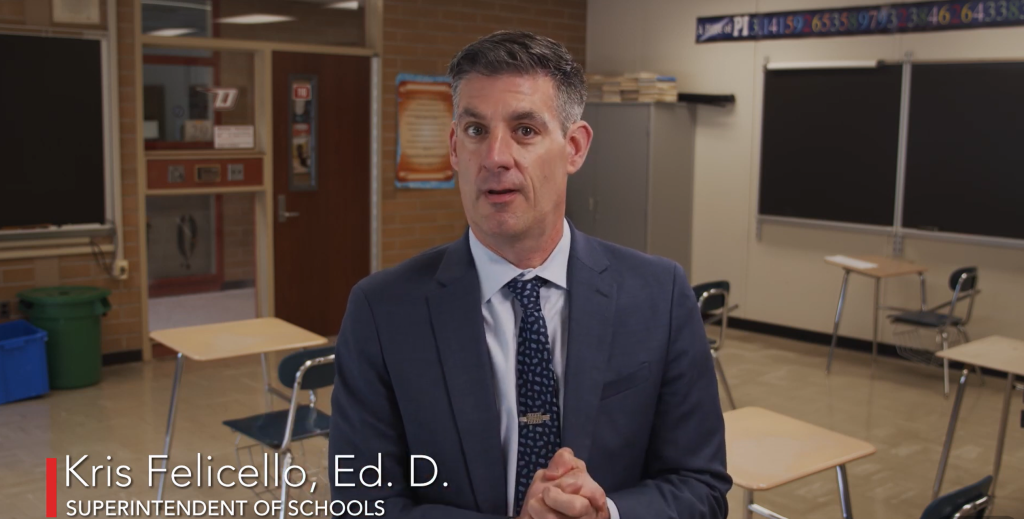
Superintendent Kris Felicello, however, said the numbers reflect intentional and responsible fiscal strategies, not misleading budgets.
“During the period of the Comptroller’s audit, NRCSD is proud of the fact that it significantly increased revenues through intentional and responsible strategies,” Felicello said, citing more than $50 million secured through competitive grants, along with expanded participation in state and federal aid programs.
“These efforts were not accidental; they were the result of deliberate planning, expertise and hard work,” he said.

Fund balance and reserves
The audit also found that the district’s surplus fund balance often exceeded the state’s legal limit of 4 percent of the following year’s budget when certain adjustments were included. In some years, auditors said, the surplus reached as high as 12 percent.
By the end of the 2023–24 fiscal year, the district’s unassigned surplus general fund balance stood at $11.4 million. Reserve funds averaged $58.5 million over the audit period and totaled $52 million at the end of 2023–24.
Auditors said the district transferred $94.4 million at year’s end during the review period, including $57.6 million into reserve funds. Some transfers totaling $19.1 million were not approved by the Board prior to being made, and the district lacked a written reserve fund policy, according to the report.
District officials counter that these actions were prudent and transparent.
Rather than spending down funds at the end of the year simply to stay under the 4 percent cap, Felicello said the district made a conscious choice to create a voter-approved capital reserve.
“That approach avoided a common and counterproductive practice and allowed us to use public funds thoughtfully and responsibly,” he said.
Long-term planning vs. pandemic uncertainty
The Comptroller’s Office also faulted the district for not adopting a written multi-year financial plan or a comprehensive capital plan, saying the absence of those documents limited the Board’s ability to assess long-term risks and future costs.
District leaders respond that the audit period overlapped with unprecedented uncertainty caused by the COVID-19 pandemic.
Despite that uncertainty, Felicello said the Board and administration produced budgets that lowered the tax levy, making North Rockland the only school district in New York State not to raise the tax levy over six consecutive years.
Auditors acknowledged that spending and reserves supported district operations but maintained that better long-term planning documents would improve oversight and transparency.
Investments without raising taxes
While the audit frames the accumulation of fund balance and reserves as a management concern, district officials point to tangible results.
Without raising taxes or asking voters for additional funding through a referendum, Felicello said the district completed major capital improvements, including air conditioning in all buildings, upgraded athletic facilities, outdoor learning spaces, new roofs and windows, expanded parking and playground improvements.
“These investments directly benefit students, staff and the greater community,” he said. “To criticize these outcomes as a failure of fiscal planning feels less like constructive feedback and more like being penalized for responsible, effective leadership.”
What comes next
The audit includes eight recommendations aimed at improving budgeting accuracy, reserve policies and long-term financial planning. District officials disputed several findings, and the Comptroller’s Office addressed those disagreements in the report’s appendices.
Under state law, the Board of Education must submit a written corrective action plan within 90 days, outlining how it will respond to the audit’s recommendations. The plan must be posted publicly on the district’s website.
The audit was conducted under the authority of the New York State Constitution and state law governing oversight by the Comptroller’s Office.